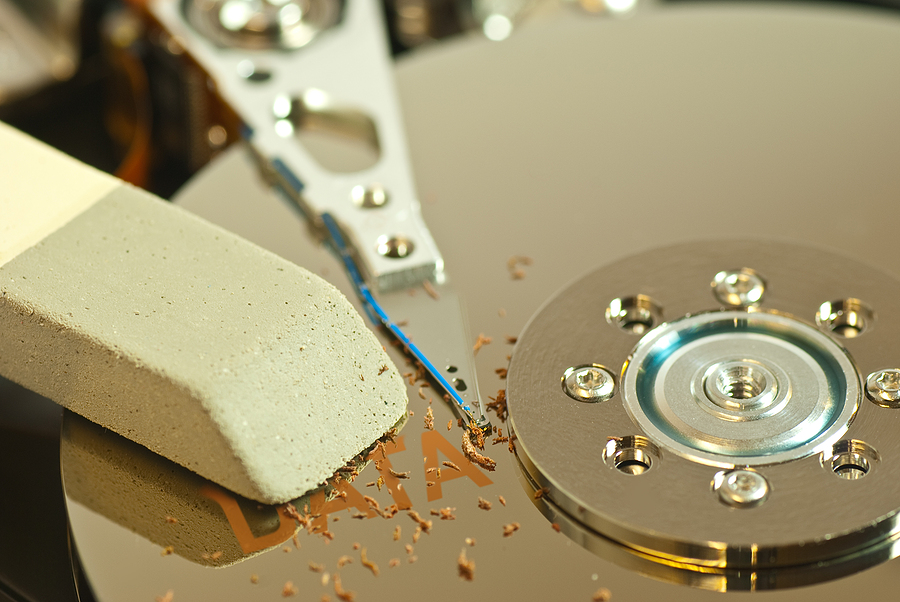
As we are in a digital-first world, data security is a huge deal and an important part of how we protect ourselves while still using this technology. Because of the data threats that can come with our plugged-in lives, ITAD and data erasure are important aspects of keeping people safe and their information secure. As artificial intelligence advances quickly, a new risk emerges: AI-assisted data recovery. This is where data erasure technology comes in to keep that information from getting into the wrong hands. Let’s explore how data erasure technology is evolving and how it can help address AI-assisted data threats that have emerged.
What is Data Erasure?
Data erasure is an important part of the ITAD process, and device retirement is the step in which all personal and sensitive data on those devices is cleared. Ultimately, many industries rely on this secure data disposal process to keep their information out of the wrong hands. Industries like ITAD< healthcare, government, and finance industries rely heavily on this process to keep their information secure. Improper data disposal is a growing threat as people and technology advance, increasing the risk of sensitive data being recovered. If the data isn’t disposed of properly, it can lead to problems such as regulatory penalties, reputational damage, and data breaches.
In addition to ensuring businesses go through this process to keep their data out of the wrong hands, it is also important to keep them compliant with standards like NIST, HIPAA, and GDPR. Data erasure is growing in importance, especially as technology advances and sensitive information is getting harder to destroy and easier to retrieve.
AI-Assisted Data Recovery is Ramping Up
Because of the advancements in artificial intelligence, it is now being used to recover sensitive data from retired devices. Machine learning helps improve pattern recognition for partially erased data and the reconstruction of fragmented files. Essentially, it is smart enough to “fill in the gaps” left by incomplete data erasure. Even if files appear to have been deleted, erased, and fully overwritten, AI can analyze residual data fragments and storage patterns to reconstruct usable information. An example of this would be if portions of documents or databases were partially erased, they can be reconstructed using artificial intelligence. This intelligence is why traditional security measures may not be suitable for handling this type of data security issue.
Limitations of Current Data Erasure Methods
When it comes to traditional data erasure methods, they are not enough to combat the intelligence of AI and how it can piece together missing information. Multiple areas of limitation need to be recognized as we consider how to combat AI-assisted recovery threats. Here is a look at some of the limitations that we will run into:
Overwriting Assumptions
In traditional approaches, we typically overwrite data once or a couple of times, making it unrecoverable, but this isn’t the case with AI-assisted recovery threats. Artificial intelligence can sometimes detect residual patterns even after they are overwritten, meaning traditional overwriting methods are insufficient.
SSD Overwriting Issues
One of the major issues we will run into is that SSDs don’t overwrite data in a linear, predictable way. This means that when data is spread, it can span multiple physical cells, leaving the original data untouched. This also means that overwritten data might be stored in a new location rather than replacing the old one, leaving that information vulnerable.
Inaccessible Data Areas
Sometimes, with traditional erasure, bad sectors, remapped blocks, and firmware-level storage data can be ignored and untouched. This can cause issues for me, as it leaves data on devices even if it’s been “Erased,” and therefore artificial intelligence can retrieve this information.
Delete vs Erase Misconceptions
There is a misconception around deleting and erasing data. Deleting data only removes the surface-level information, not the actual data. Erasure is when the data itself is fully erased from the drives. This means that some companies don’t have proper deletion practices, or they are not fully erasing data as a result.
Not Keeping AI in Mind
Traditional erasure standards weren’t built with artificial intelligence in mind. They only focus on making the data unreadable, not unreconstructable. However, AI can rebuild files, fill in gaps, and combine fragments to make usable information. Ultimately, this means that traditional methods leave gaps that can lead to the recovery of materials.
How Data Erasure Technology is Evolving
Data erasure technology is evolving to keep pace with the intensity of AI and its capabilities. Let’s explore how data erasure technology is evolving and what we can expect to see in the future:
Advanced Overwriting
Overwriting will become more advanced as it will be randomized and pattern-resistant. This will prevent AI from recognizing patterns in the process and make the overwriting process much more advanced, so companies can ensure their process is accurate and the data is erased. Additionally, we can expect a verification process to confirm complete erasure, so there is no possibility that the data remains.
Intelligent Erasure Systems
We can expect to see AIA used in erasure techniques, where it will assess risk or choose optimal methods for erasure based on the device’s details. These systems will also integrate with ITAD workflows, adding a step to the process. Real-time reporting and audit trails will also be something we will see in the future.
AI-Resistant Erasure Techniques
Erasure techniques will be reimagined to prevent AI from piecing the data back together. This will also mean an increase in randomness in overwrite patterns, so artificial intelligence is unable to recognize or reconstruct them. There will also be adaptive erasure based on the device type and risk level, so that each device is erased according to its capacity, type, and the information it contains.
The Future of Data Erasure
The future of data erasure will change as artificial intelligence becomes more widely used to address recovery threats. Data security is already a huge problem for many companies and industries, but the addition of intelligence like AI makes the risk even greater. We can expect the erasure technique to evolve, ensuring there are no gaps AI can fill and keeping data secure across the board. As a company, it’s crucial to start implementing a new data erasure technique to stay ahead of potential threats and integrate it into your process. Working with a certified and trusted ITAD partner will also help you stay on top of potential threats and combat any AI threats. Our techniques will continue to evolve as threats continue to evolve as well.
